
- Home
- Product
- Fuse
- Electrical Protection
- Fuse Holder and Fuse Base
- Copper Busbar
- PV System
- Busbar System
- Electric Meter Box
- Power Distribution Box
- Blog
- Projects
- Resource
- Solutions
- About Us
- Contact Us
- VR Visit


Founded in 1992, Zhejiang GRL Electric Co., Ltd. operates a 4,000-square-meter facility and employs over 500 professionals. GRL integrates R&D, production, sales, and service, specializing in electrical protection and connection solutions.
Our product portfolio includes low-voltage enclosed busbar systems, load isolator switches, fuse switch disconnectors, knife switches, transfer switches, medium-voltage isolation switches, medium-voltage drop-out fuse cutouts, copper busbars, fuse holders, fuse bases, surge protection devices, lightning surge arresters. These products serve diverse sectors, including power distribution, industrial control, automotive manufacturing, and renewable energy, meeting the varied needs of our global customer base. Rigorous testing ensures all products comply with national and international standards, guaranteeing exceptional reliability and performance.
A leading player in China’s low-voltage busbar systems and disconnector switch market, GRL has delivered hundreds of premium electrical components and thousands of custom solutions. Our reliable products and professional service make us a trusted long-term partner for clients worldwide.


The High Voltage Drop Out fuse link has successfully passed TÜV Rheinland's comprehensive testing and technical evaluations. This certification proves that the product meets both IEEE and IEC international standards, providing global users with a reliable solution that ensures consistent performance and product safety in various power systems.

The product integrates both overload and short-circuit protection in one device. Once the current exceeds the rated threshold, the fuse link melts and drops instantly to cut the circuit, effectively preventing further damage to transformers or other connected equipment. This enhances system stability and safety.

Upon operation, the Drop Out fuse automatically falls away, creating a distinct visible break that isolates the faulted circuit. This physical disconnection helps prevent accidental reconnection, ensuring maintenance personnel can safely inspect, troubleshoot, and restore the line with full confidence.

Thanks to its simple yet robust design, the Drop Out fuse link offers easy maintenance. After an operation, the fuse link drops and forms a visible disconnection point, clearly identifying the fault location. This allows technicians to quickly replace the fuse, reducing system downtime, labor intensity, and maintenance cost.

This Drop Out fuse is engineered to handle complex and demanding electrical environments. With tailored structural enhancements and insulation choices (porcelain or polymer), it provides targeted protection for special conditions like high pollution, coastal regions, and areas prone to voltage fluctuations or mechanical stress.

Designed in strict accordance with IEC 60282-2 and IEEE C37.41, this Drop Out fuse cutout offers double assurance in terms of quality and technical integrity. Its international compliance allows it to operate seamlessly across a wide range of high-voltage applications, from public utilities to industrial distribution networks.


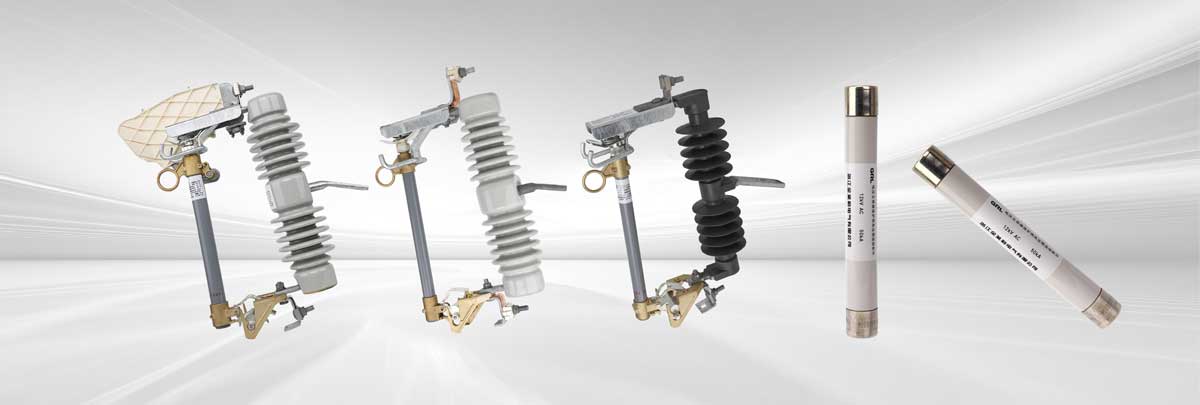
In electrical distribution, a fuse cutout or cut-out fuse (often referred to as a cutout) combines a fuse and a switch, used in primary overhead feeder lines and taps to protect distribution transformers from current surges and overloads. An overcurrent caused by a fault in the transformer or customer circuit will cause the fuse to melt and the switch mechanism to open, disconnecting the transformer from the line visibly. The device can also be opened manually by utility linemen standing on the ground and using a long insulating stick called a “hot stick”.
Drop-out fuse cutout is primarily installed on the primary side of distribution transformers and 10~33kV distribution lines to protect equipment and facilitate switching operations.
The expulsion fuse cutout comprises an insulating bracket and a fuse tube. Static contacts are mounted at both ends of the insulating bracket, while dynamic contacts are installed at both ends of the fuse tube. The fuse tube itself consists of an inner arc extinction tube and an outer layer made of either phenolic paper or epoxy glass cloth. This construction offers a compact size, lightweight design, straightforward manufacturing process, flexible installation, ease of operation, and strong adaptability to outdoor environments. The fuse can interrupt non-load currents when equipped with an arc extinguishing hood to ensure that the arc is extinguished quickly
These features make the drop out fuse link an essential component for enhancing the reliability and safety of 10kV power distribution systems.
Read on: Understanding HV Fuses and Current Limiting Fuses in Specialized Applications
 Current-Limiting-Fuse High-voltage-drop-out-fuse High-Voltage-Fuse-Link
 Yes, lightning can blow out a fuse, including a drop-out fuse link. A lightning strike can create a surge of power that is far beyond what a circuit breaker or fuse is designed to handle.
When lightning strikes a power line or nearby infrastructure, it can generate a high-voltage surge that travels along the electrical distribution network. If this surge surpasses the current rating of the utility fuse, the fuse element melts, causing the fuse holder to drop out and interrupt the circuit. This mechanism protects downstream equipment from potential damage.
However, frequent lightning-induced operations can lead to unnecessary power outages and increased maintenance efforts.
To solve this problem, the fuse cutout can be used with a metal lightning arrester.
How to Mitigate Lightning-Induced Fuses?
To reduce the likelihood of drop-out fuses operating due to lightning, several strategies can be employed:
Read on: Composite Insulator vs. Porcelain Insulator vs. Glass Insulator: Which One Fits Your Needs?
Composite-Insulators High-Voltage-Fuse-Link 英文目录-高压避雷器 A drop-off fuse link is designed to interrupt the flow of electricity during fault conditions, such as short circuits or overloads. When the current exceeds the fuse’s rated capacity, the fuse element melts, causing the fuse tube to drop out of its holder. This action visibly indicates a fault and physically disconnects the faulty section from the rest of the system, preventing further damage and isolating the issue for safe maintenance.
Several factors can lead to the operation of a drop-out fuse link:
Overload or Short Circuit: Excessive current due to equipment failure or external factors like lightning strikes.
Aging or Deterioration: Over time, environmental exposure can degrade fuse components, leading to unintended operations.
Improper Installation: Incorrect tension or alignment can cause premature fuse operation.
External Damage: Physical impacts or contamination can compromise fuse integrity.
Steps to Take After Fuse Operation
Safety First: Ensure the area is safe and de-energized before approaching the fuse.
Visual Inspection: Examine the fuse for signs of damage or wear.
Identify the Cause: Determine the underlying issue that led to the fuse operation.
Replace the Fuse: Install a new fuse link with the correct specifications.
Test the System: After replacement, test the system to confirm normal operation.
drop-out-fuse Replacement Frequency of drop out fuse links
Drop out fuse links are designed to operate (i.e., “blow”) under fault conditions such as overcurrents or short circuits. Under normal operating conditions, these fuse links do not require regular replacement. However, certain factors necessitate their replacement:
Maintenance Best Practices
To ensure the longevity and reliability of drop-out fuse links:

Product Categories
Quick Link
Contact Us

 Optimized by Seraphinite Accelerator


