
- Home
- Product
- Fuse
- Electrical Protection
- Fuse Holder and Fuse Base
- Copper Busbar
- PV System
- Busbar System
- Electric Meter Box
- Power Distribution Box
- Blog
- Projects
- Resource
- Solutions
- About Us
- Contact Us
- VR Visit


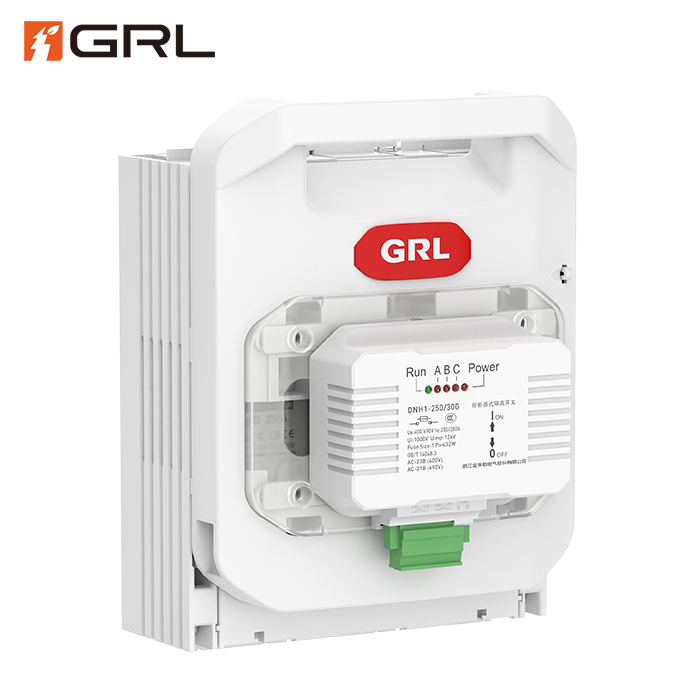
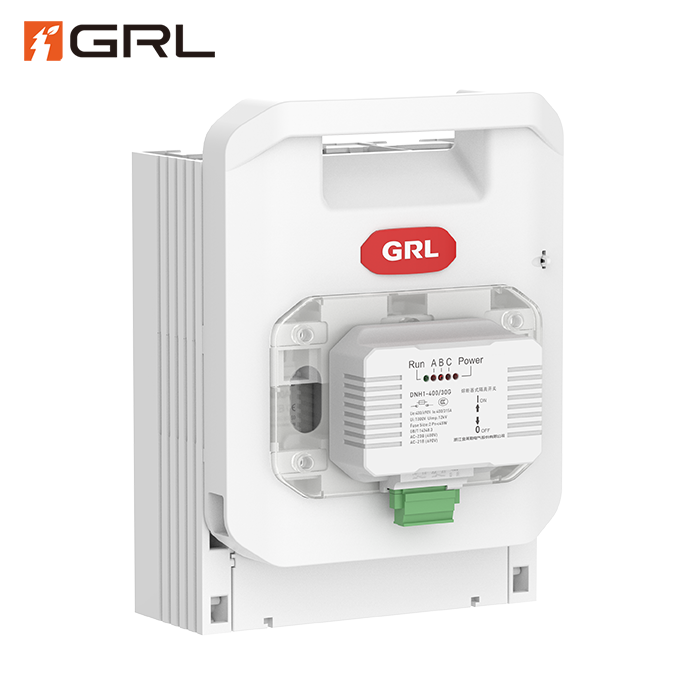
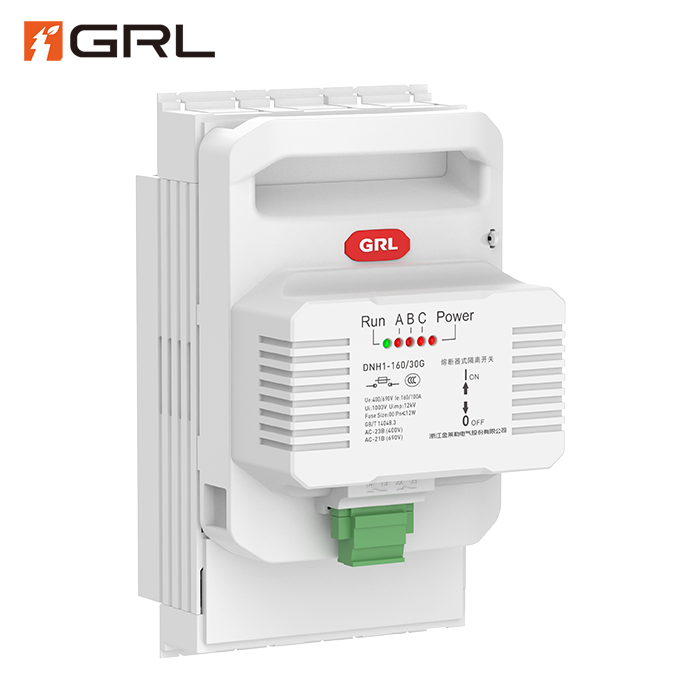

| Specification | DNH1-160 | DNH1-250 | DNH1-400 | DNH1-630 | |||||||
| Rated operational voltage | Ue | V | AC 400 | AC690 | AC 400 | AC 690 | AC400 | AC 690 | AC400 | AC690 | |
| Rated operational current | le | A | 160 | 160 | 250 | 250 | 400 | 400 | 630 | 630 | |
| Conventional Thermal Current | Ith | A | 160 | 160 | 250 | 250 | 400 | 400 | 630 | 630 | |
| Rated short-circuit current(with fuse) | kA | 100 | 50 | 100 | 50 | 100 | 50 | 100 | 50 | ||
| Usage category(with fuse) | AC-23B | AC-21B | AC-23B | AC-21B | AC-23B | AC-21B | AC-23B | AC-21B | |||
| Nominal insulation voltage | Ui | V | AC 1250 | AC 1250 | AC 1000 | AC1000 | AC 1000 | AC 1000 | AC 1000 | AC 1000 | |
| Rated impulse withstand voltage | Uimp | kV | 12 | 12 | 12 | 12 | 12 | 12 | 12 | 12 | |
| Rated frequency | Hz | 50/60 | 50/60 | 50 | 50 | 50 | 50 | 50 | 50 | ||
| Electrical life(number of cycle operations) | times | 200 | 200 | 200 | 200 | 200 | 200 | 200 | 200 | ||
| Maximum tightening torque | N.m | 12 | 12 | 20 | 20 | 20 | 20 | 28 | 28 | ||
| Fuse | Executive standard:IEC60269-2 GB/T13539.2 | 00 | 00 | 1 | 1 | 2 | 2 | 3 | 3 | ||
| Rated operational current | In | A | 160 | 160 | 250 | 250 | 400 | 400 | 630 | 630 | |
| Power dissipation | Pn | w | ≤12 | ≤32 | ≤45 | ≤60 | |||||
| Normal usage, installation and transportation conditions | Ambient air temperature | -5℃~+40℃ | |||||||||
| Altitude | ≤2000m | ||||||||||
| Installation category and pollution level | Ⅲ、IV | 3 | |||||||||
| Transportation and Storage | -25℃~+55℃ | ||||||||||

The GRL DNH1 Series has long been a benchmark for reliability in power distribution. To meet the increasing demand for smart grids and automated industrial facilities, we have integrated an Electronic Fuse Core Monitoring system into this proven platform.
Covering a current range from 160A to 630A and supporting operating voltages of 400V and 690V AC, this series is no longer just a passive protection device. It is now an active component of your diagnostic network, specifically designed for applications where downtime is costly, such as wind power plants, data centers, and continuous manufacturing lines.
The core innovation of this DNH1 variant is the integrated electronic monitoring accessory. In traditional systems, a blown fuse might go unnoticed until a phase failure causes equipment damage or process interruption.
Real-Time Fault Detection: The electronic monitoring core continuously senses the state of the fuse links. The moment a fuse blows, the system detects the change in potential or continuity.
Remote Signaling Capability: The monitoring unit provides a clear output signal that can be wired directly to a PLC (Programmable Logic Controller) or a central control room. This allows maintenance teams to identify the exact location of a fault without manual inspection.
Status Visibility: Local LED indicators on the monitoring module provide immediate visual confirmation of the fuse status, simplifying troubleshooting for on-site technicians.
The DNH1 series with monitoring maintains all the robust mechanical properties of the standard range while adding layers of intelligence.
Current Range: Available in frame sizes supporting 160A, 250A, 400A, and 630A, ensuring compatibility with a wide array of industrial loads.
Voltage Support: Fully optimized for 400V and 690V AC systems, making it a versatile choice for standard factory power as well as specialized energy sectors.
Breaking Capacity: With a high short-circuit breaking capacity (50kA), the device ensures that even the most severe faults are contained safely.
Compliance: The entire assembly, including the monitoring accessories, adheres to the IEC 60947-3 and GB/T 14048.3 standards for low-voltage switchgear and controlgear.
Integrating electronic monitoring into your DNH1 switch disconnectors offers several strategic advantages:
Minimized Downtime: By providing instant notification of a blown fuse, the “Mean Time to Repair” (MTTR) is significantly reduced.
Enhanced Safety: Operators no longer need to open cabinet doors to manually test fuses with a meter, reducing the risk of accidental contact with live parts.
Preventive Maintenance: The monitoring system can help identify recurring phase imbalances or overloads before they lead to catastrophic system failure.
The monitoring accessory is designed to be as compact as the switch itself, maintaining the DNH1’s signature space-saving structure.
Compact Design: The monitoring unit integrates seamlessly into the switch housing without requiring significant additional cabinet depth.
Easy Wiring: The signaling terminals are clearly marked and easily accessible, facilitating quick integration into existing automation or SCADA systems.
Vertical Mounting: Like the standard DNH1 series, this version is designed for fixed, vertical installation to ensure optimal thermal performance and reliable mechanical operation.
This intelligent series is the ideal choice for sectors where 24/7 uptime is critical:
Wind Power & Solar Energy: Monitoring fuses in remote box-type transformers where manual inspection is difficult.
Automated Production Lines: Integrating circuit status into the factory’s central automation logic.
Critical Infrastructure: Protecting power supplies for hospitals, telecommunications, and data centers.
The GRL DNH1 Series with Electronic Fuse Monitoring represents the next step in the evolution of circuit protection. By combining high-capacity switching (up to 630A) with real-time electronic diagnostics, it provides the perfect balance of robust physical protection and modern digital oversight. Ensure your high-voltage systems are not just protected, but also connected.
Click to view What Is a Fused Disconnect Switch?
Click to view GRL LinkedIn >>
Click to view GRL YouTube>>

Product Categories
Quick Link
Contact Us

s
 Optimized by Seraphinite Accelerator


