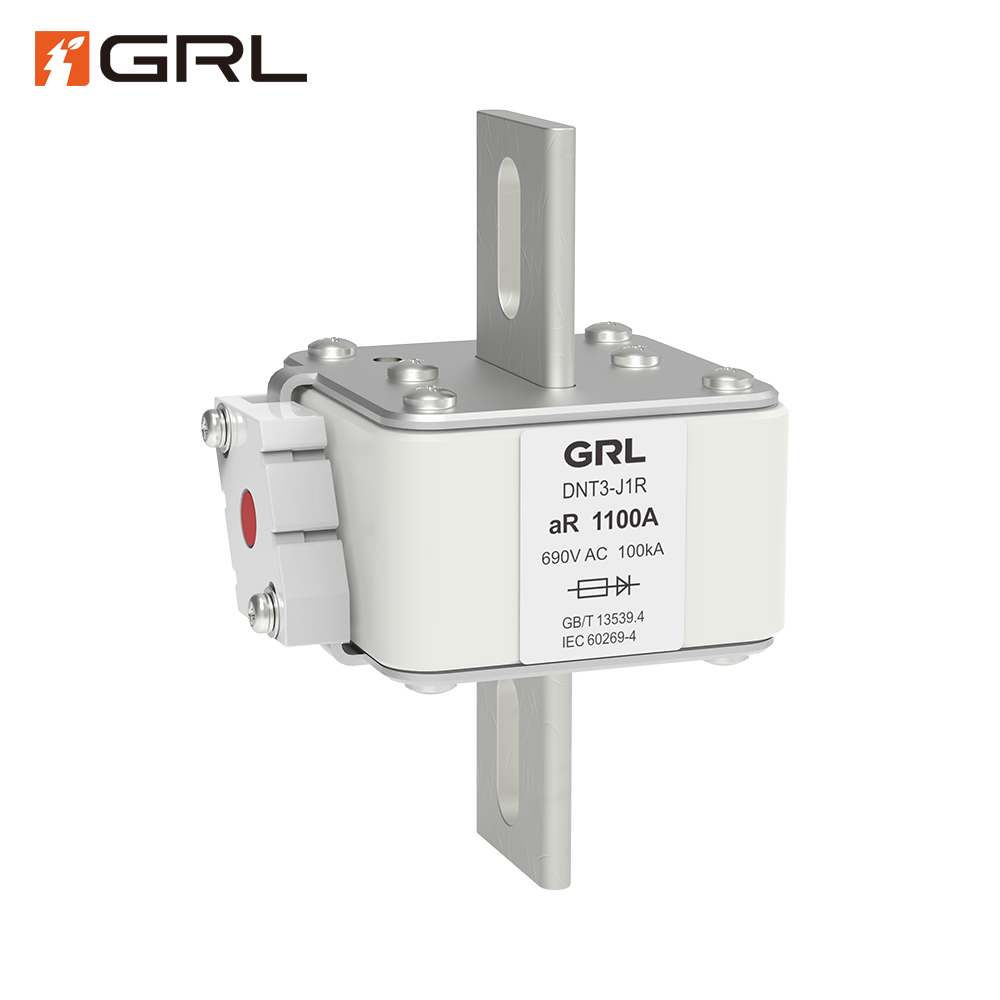
DNT3-J1R Semiconductor Fuse Features
The design of the DNT3-J1R Fuse integrates advanced material science with precise engineering to deliver microsecond-range protection:
- Optimized Silver Melting Elements: Utilizes high-purity, precisely contoured silver elements designed to vaporize rapidly and simultaneously at predetermined points. This engineered geometry ensures the ultra-fast pre-arcing time necessary to function as an effective Current Limiting Fuse.
- Rugged Square Body Fuse Structure: The pressure-resistant ceramic casing provides exceptional mechanical stability and thermal management. The design ensures the fuse remains stable under the severe thermal cycling and vibration encountered in industrial drives, wind turbines, and rail environments.
- Proprietary Arc Quenching Technology: The internal chamber is densely packed with chemically purified quartz sand. When a fault occurs, this filler rapidly cools and absorbs the arc energy, facilitating safe and quick interruption and preventing dangerous Overvoltage peaks that could damage adjacent circuitry—a key aspect of reliable DC Link Protection.
- Integrated Monitoring: Features a visual indicator or striker pin compatibility for simple connection to external monitoring systems, enabling instant, remote fault notification and minimizing time spent on diagnostics.
DNT3-J1R Semiconductor Fuse Advantages
Choosing the GRL DNT3-J1R is a strategic decision that fortifies your high-power assets:
- Unbeatable Speed (aR Class): Acts faster than the inherent failure time of modern power semiconductors, offering true IGBT Protection and leading to significant component cost savings and maximized uptime.
- Highest Efficiency: The low wattage loss design ensures the High-Speed Fuse runs cooler, reducing energy waste and extending the operating lifespan of surrounding equipment within the electrical cabinet.
- Global Standard Compliance: Full adherence to IEC 60269-4 ensures the fuse is suitable for global deployment in large-scale international projects.
- Future-Ready 690V AC Protection: Perfectly matched to the high-demand 690V AC power distribution systems, making it the ideal component for next-generation industrial, wind, and marine infrastructure.
DNT3-J1R Semiconductor Fuse Applications
The robustness and precision of the DNT3-J1R make it indispensable in the world’s most critical medium-voltage AC sectors:
- Industrial Automation & Drives: Used in high-power Medium Voltage Drives and large VFD Protection (Variable Frequency Drive) systems, where reliable Semiconductor Protection for industrial motors is mission-critical to maintaining continuous operations.
- Renewable Energy (Wind Power): Essential in the inverter circuits of wind turbines, protecting high-power output stages and ensuring grid stability at 690V AC grid tie-in points.
- Rail and Traction: Provides vital High-Speed Fuse protection within Traction Converters and onboard auxiliary power systems in electric trains, where high resistance to vibration and absolute safety are mandatory.
- Power Conversion and UPS: The core protection component within large industrial UPS (Uninterruptible Power Supplies) and power quality equipment, protecting the AC 690V output and input rectifier stages.
DNT3-J1R Semiconductor Fuse FAQs
Q: Why is the Extremely Low I2t Value so critical for SiC and IGBT protection?
A: The I2t value (Ampere-squared-seconds) is the amount of energy the fuse allows through during a fault before opening. Because power semiconductors like SiC and IGBTs have extremely low thermal limits, they can be destroyed by even tiny amounts of let-through energy. The GRL DNT3-J1R is engineered to minimize this value to an absolute minimum, ensuring the fuse operates before the semiconductor is damaged, providing true, reliable SiC Protection.
Q: How does this High-Speed Fuse contribute to lower operating costs?
A: Beyond preventing the replacement of expensive semiconductors (the primary Downtime Reduction benefit), the Square Body Fuse design’s low resistance connections and high-efficiency core significantly reduce power loss (I2R) during normal operation. Over the lifespan of a large-scale system, this reduction in heat and wasted energy translates into substantial operational savings and enhanced System Reliability.