Introduction
Double-indicator NH fuses are similar to standard NH knife-blade fuses but feature visual indicators on both ends of the fuse link. Like their single-indicator counterparts, they provide robust low-voltage fuse protection in industrial and power distribution applications.
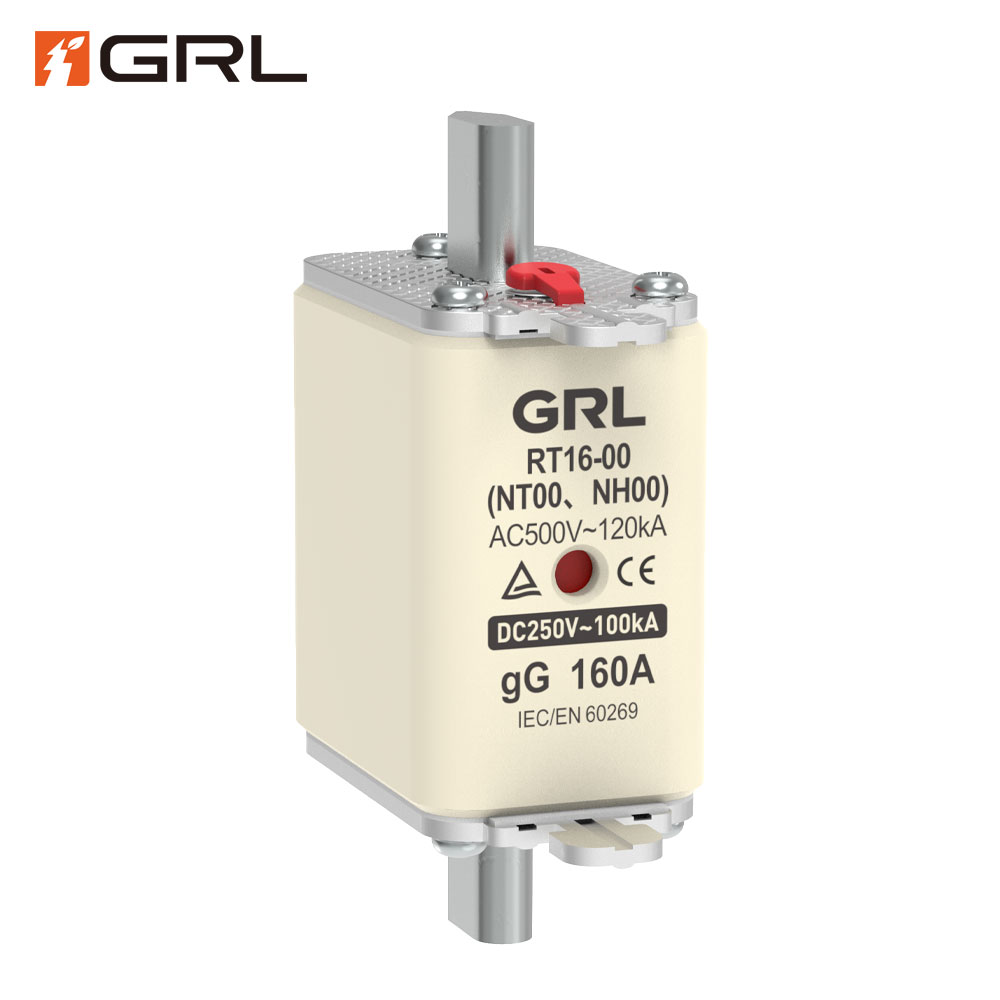
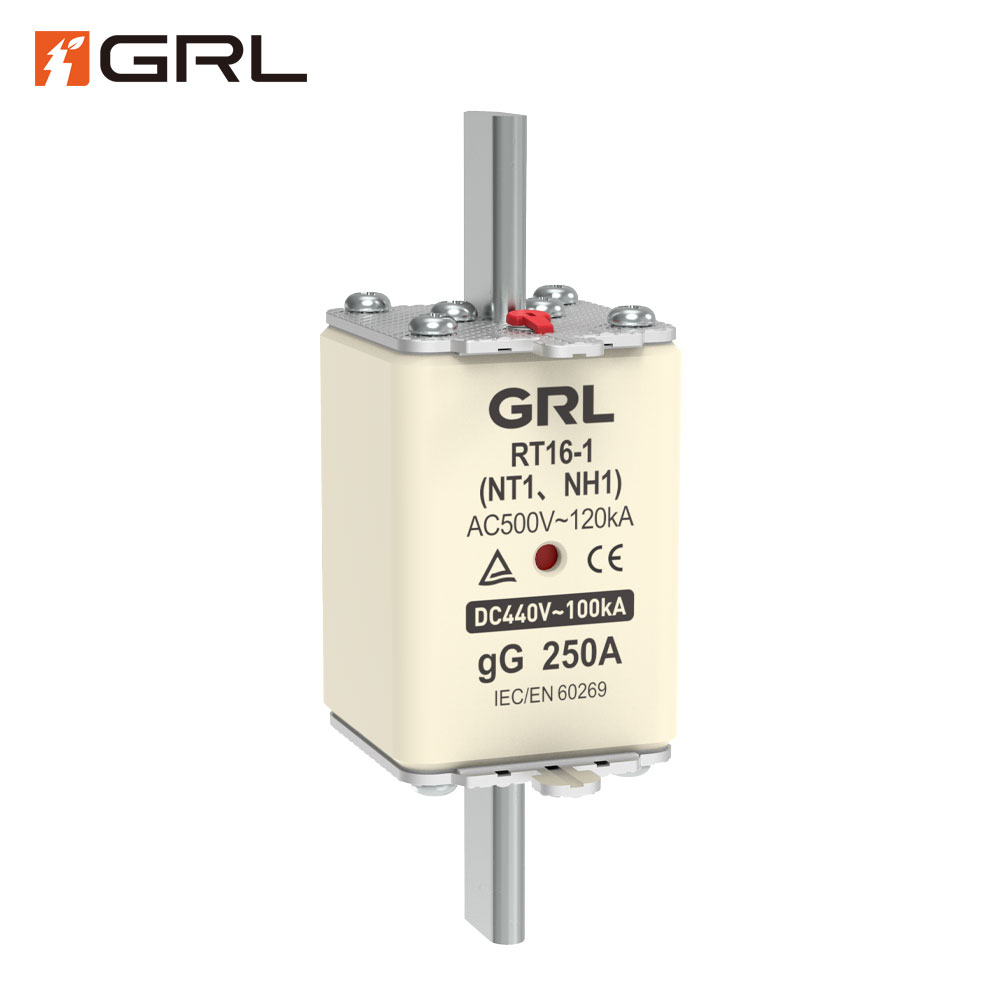
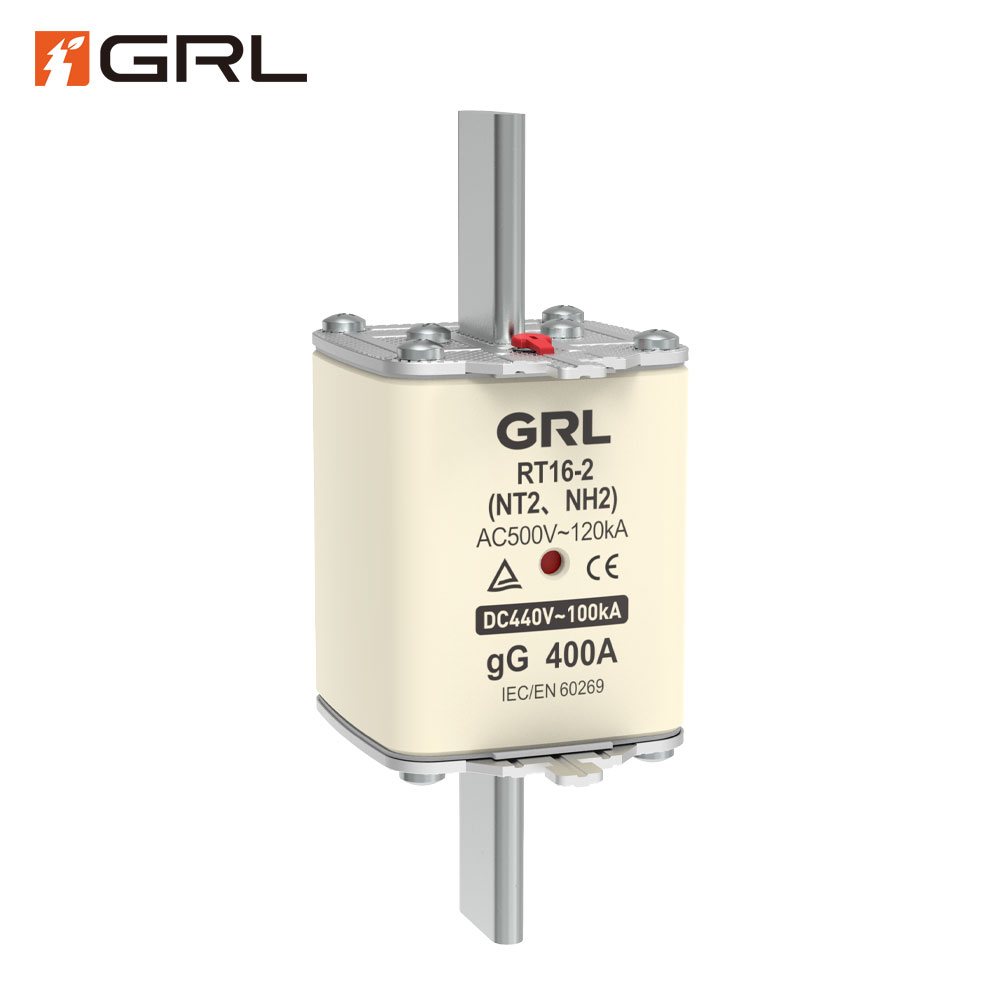
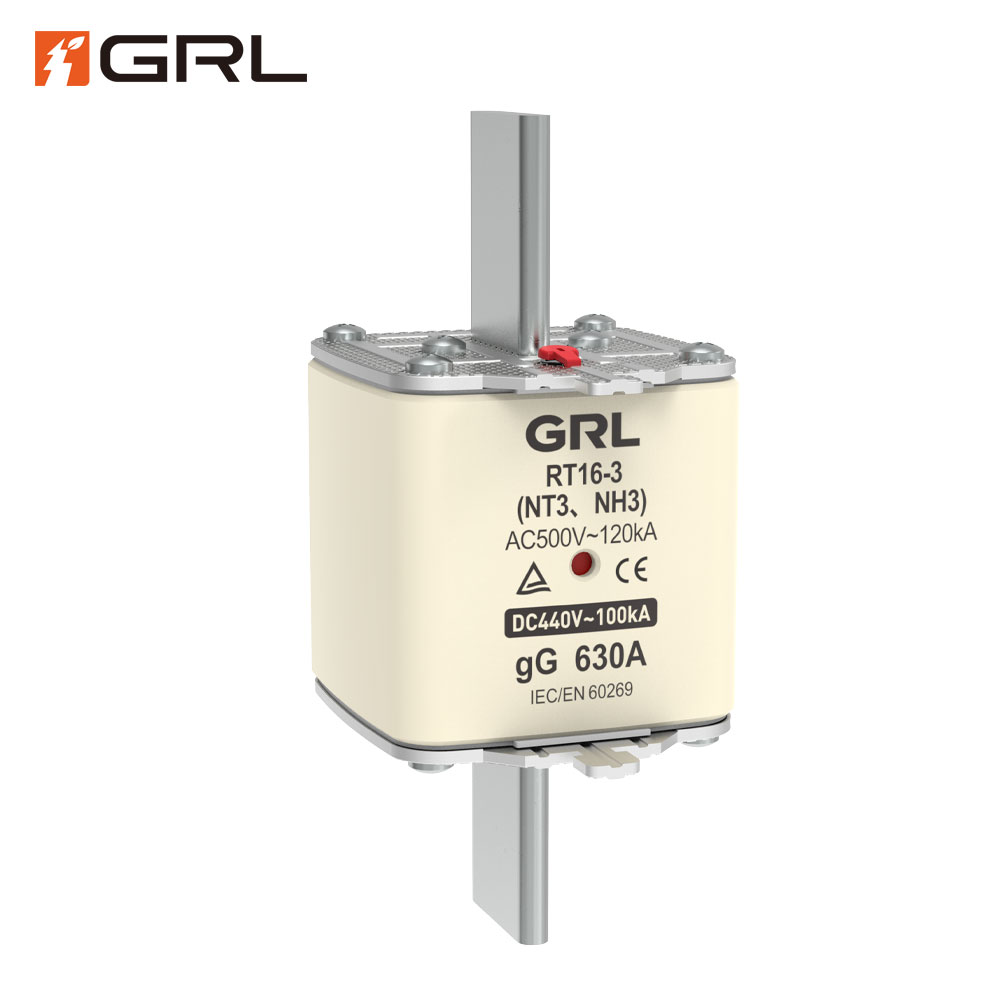
An NH fuse link DIN 43620 / IEC 60269‑2 consists of a high-performance ceramic body with blade contacts; double-indicator models include two internal spring flags – one at each end – that pop out when the fuse element blows. This dual indication ensures the blown condition is visible from either side of a switchgear panel or fuse block, which can be advantageous in multi-phase or hard-to-access installations.
Otherwise, double-indicator NH fuses retain the same full-range gG characteristics as standard NH fuses: wide current ranges 2–630 A and very high breaking capacities up to 120 kA at 500 VAC.
GRL’s double-indicator NH fuse links are fully compliant with IEC 60269-2. They are CE-certified, offering reliable overload and short-circuit protection for industrial control equipment, panel boards, and energy distribution systems.
Structure and Features
Double-indicator NH fuse links are constructed like single-indicator ones, with the main difference being the indicator. The fuse body is a flame-retardant porcelain tube filled with high-purity silica sand, capped by stamped aluminum-alloy covers. Two identical spring-operated trip indicators are incorporated (one under each cover); when the fuse element melts under fault, both flags pop out of the ends. The cover plates and contacts are mirror images, each end having a copper knife blade that fits into the fuse holder. Other components – high-strength nylon plug, copper fuse element, etc. – are the same quality as single-indicator fuses.
The double indication means maintenance personnel can see which phase (or which end) is blown from either side of the panel, improving diagnostic speed in three-phase or multi-fuse arrangements. GRL double-indicator NH fuses use the same premium materials and precision assembly as our other NH series, ensuring consistent electrical performance and reliable operation in harsh industrial environments.
double-indicator fuse?
The dual indicators make fault identification easier in complex panels. When any phase’s fuse blows, a flag will appear on that fuse at both ends, so you can see the blown fuse from either side of the busbar or door. This is especially useful in multi-pole switchgear.
Are double-indicator fuses otherwise different from single-indicator fuses?
Electrically, no. Both types have the same rated voltages, currents, and gG protection. The only difference is the indicator flags. All other characteristics (breaking capacity, materials, dimensions) match standard NH fuse specifications.